Male fertility is often misunderstood, overlooked, or brushed aside yet it plays an equally important role in conception as female fertility. If you’re trying to conceive or simply want to understand your reproductive health better, knowing the early signs of male infertility affecting sperm health can save time, stress, and emotional strain.
Many men assume that fertility problems always come with obvious symptoms. In reality, sperm health issues can develop quietly over time. The encouraging part? Most male fertility problems are diagnosable, treatable, and sometimes reversible, especially when addressed early.
Let’s break it all down clearly, honestly, and without unnecessary medical jargon.
Why Sperm Health Matters More Than You Think
Sperm health is not just about numbers. Even men who feel perfectly healthy can experience fertility challenges due to subtle sperm abnormalities.
For successful conception, sperm must:
- Be produced in sufficient quantity
- Move efficiently toward the egg
- Have the correct structure to penetrate the egg
- Survive long enough in the female reproductive tract
If any of these factors are compromised, it may result in male fertility issues, even if sexual function appears normal.
What Exactly Is Male Infertility?
Male infertility refers to a man’s reduced ability to cause pregnancy, typically identified after 12 months of regular, unprotected intercourse without conception.
Male infertility may be caused by:
- Low sperm count
- Poor sperm motility or abnormal morphology
- Hormonal imbalances
- Structural blockages or testicular disorders
- Genetic factors
- Lifestyle and environmental exposures
Contrary to common belief, infertility is not a reflection of masculinity or virility — it’s a medical condition, and one that can often be managed effectively.
How Doctors Evaluate Sperm Health
The cornerstone of male fertility testing is the semen analysis. This simple yet powerful test provides insight into sperm health by evaluating:
- Sperm count – total number of sperm present
- Motility – how well sperm move
- Morphology – shape and structure of sperm
- Semen volume – amount of fluid carrying sperm
Abnormalities in one or more of these parameters may explain difficulties with conception and guide further testing or treatment.
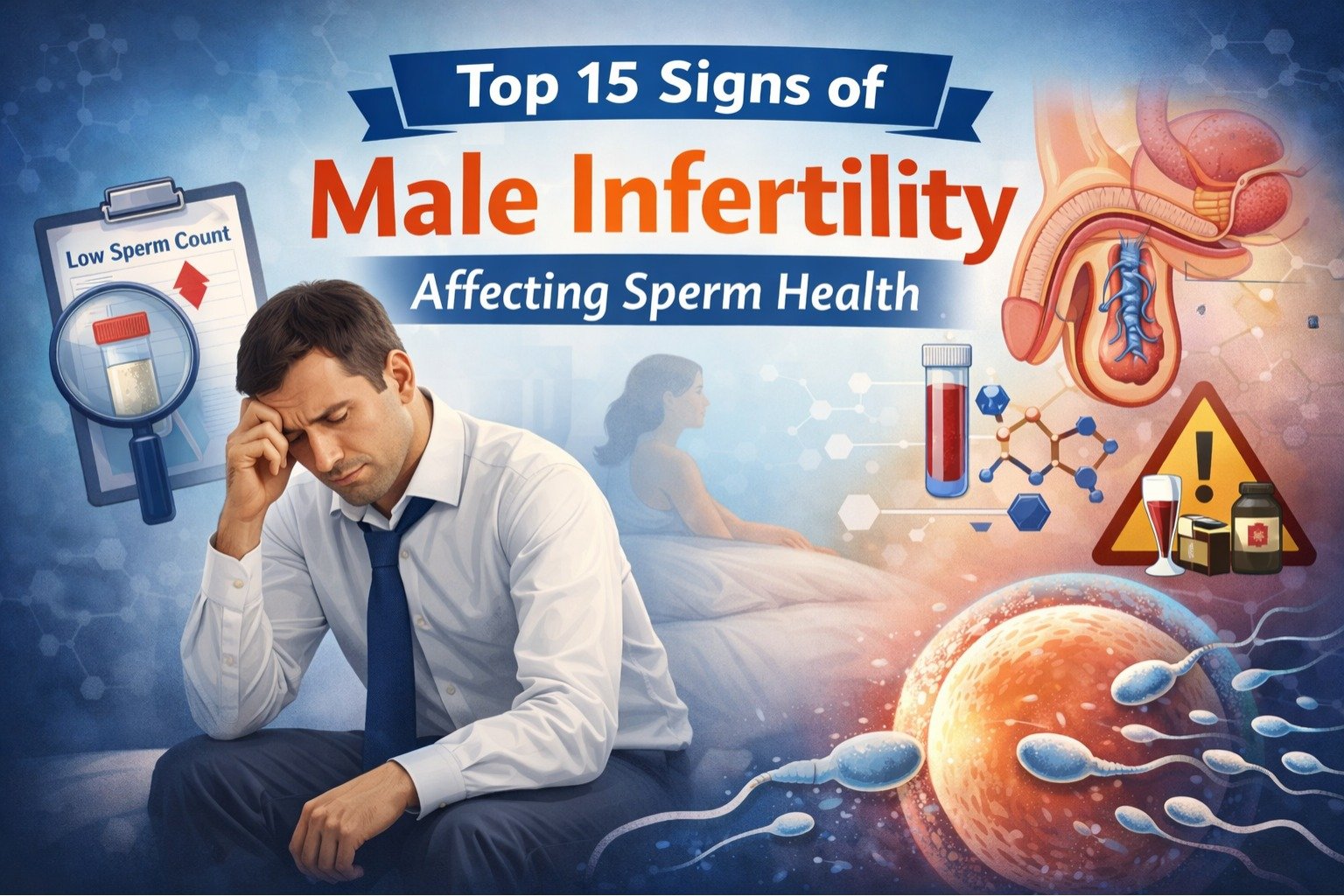
Top 15 Signs of Male Infertility Affecting Sperm Health
1. Low Sperm Count (Oligospermia)
Low sperm count is one of the most common signs of male infertility. It means there isn't enough sperm available to fertilize an egg, which naturally lowers the chances of conception. Many men don’t notice any physical symptoms, which is why this issue often goes undetected until a semen analysis is done. Hormonal imbalances, lifestyle habits, infections, or testicular conditions can all contribute to low sperm production over time.
2. Poor Sperm Motility
Healthy sperm need to swim efficiently to reach and fertilize the egg. When sperm movement is slow or weak, even a normal sperm count may not be enough to achieve pregnancy. Poor sperm motility is often linked to heat exposure, oxidative stress, infections, or nutritional deficiencies. Since there are usually no outward signs, many men discover this issue only after fertility testing, which makes early evaluation especially important.
3. Abnormal Sperm Morphology
Sperm morphology refers to the shape and structure of sperm. When a large number of sperm have abnormal shapes such as misshapen heads or tails it can interfere with fertilization. Abnormal morphology often exists alongside other sperm health problems and may be influenced by genetics, toxins, or lifestyle factors. While it doesn’t always cause infertility on its own, it can significantly reduce the chances of natural conception.
4. Hormonal Imbalance in Men
Hormones play a major role in sperm production and overall reproductive health. Low testosterone or imbalances in other reproductive hormones can affect sperm count, quality, and sexual function. Men with hormonal issues may notice fatigue, low libido, mood changes, or difficulty concentrating. Because hormonal problems can quietly impact fertility, testing hormone levels is often an essential part of male infertility evaluation.
5. Erectile Dysfunction
Occasional erectile difficulties are normal, but persistent erectile dysfunction may point to underlying health concerns that also affect fertility. Hormonal imbalances, poor blood flow, stress, or chronic medical conditions can contribute to both ED and sperm health issues. While erectile dysfunction doesn’t automatically mean infertility, it’s an important signal that something may be affecting reproductive health and deserves medical attention.
6. Ejaculation Problems
Ejaculation issues such as retrograde ejaculation, premature ejaculation, or difficulty ejaculating can directly interfere with sperm delivery. In some cases, semen may travel backward into the bladder instead of exiting the body. These problems can result from nerve damage, diabetes, surgeries, or medications. Even when sperm production is normal, ejaculation problems can make natural conception challenging without proper treatment.
7. Low Semen Volume
Semen plays a crucial role in transporting sperm into the female reproductive tract. When semen volume is consistently low, fewer sperm may reach the egg. This condition can be linked to dehydration, hormonal imbalances, blockages, or previous surgeries. Low semen volume is often overlooked, but it can significantly impact fertility, especially when combined with other sperm health issues.
8. Pain or Swelling in the Testicles
Pain, swelling, or discomfort in the testicles should never be ignored. These symptoms may indicate infections, inflammation, injuries, or structural issues that can disrupt sperm production. Even mild or intermittent pain can signal an underlying problem. Early medical evaluation helps prevent long-term damage to sperm health and improves the chances of preserving fertility.
9. Varicocele (Enlarged Veins in the Scrotum)
Varicocele occurs when veins inside the scrotum become enlarged, raising the temperature around the testicles. This increased heat can negatively affect sperm production and quality over time. Varicocele is one of the most common—and treatable—causes of male infertility. Many men are unaware they have it until they undergo a fertility check or physical examination.
10. History of Infections or STDs
Past reproductive infections or sexually transmitted diseases can leave lasting effects on male fertility. Infections may cause scarring or blockages in the sperm ducts, preventing sperm from being transported properly. Even infections that were treated years ago can still impact sperm health. This is why sharing your full medical history during fertility evaluation is so important.
11. Low Libido or Chronic Fatigue
A noticeable drop in sexual desire or ongoing fatigue can sometimes be linked to hormonal imbalances that affect sperm production. While stress and lifestyle factors can play a role, persistent symptoms shouldn’t be ignored. Low libido combined with fertility concerns often signals that deeper hormonal or metabolic issues may be affecting overall reproductive health.
12. Changes in Testicular Size or Texture
Healthy testicles are essential for sperm production. Changes in size, firmness, or texture may indicate damage to the sperm-producing tissues. Smaller or unusually soft testicles can be a sign of reduced sperm output. These changes often develop gradually, making them easy to miss without a proper medical examination.
13. Difficulty Conceiving After One Year
If pregnancy hasn’t occurred after 12 months of regular, unprotected intercourse, it’s considered a key warning sign of infertility. Many couples assume the issue lies only with the female partner, but male factors contribute equally. Early evaluation at a specialized fertility clinic can help identify issues sooner and improve treatment outcomes.
14. Exposure to Toxins or Radiation
Regular exposure to chemicals, pesticides, heavy metals, or radiation often through work environments can harm sperm quality and DNA. These effects may not be immediate but can build up over time. Men working in high-risk occupations should be especially mindful of protective measures and regular fertility assessments if planning to conceive.
15. Unexplained Infertility
In some cases, all test results appear normal, yet pregnancy still doesn’t occur. This is known as unexplained infertility and can be incredibly frustrating. Subtle sperm DNA damage or functional issues may be involved. Even without obvious symptoms, professional evaluation and guidance can uncover hidden factors and open the door to effective fertility solutions.
What Causes Poor Sperm Health?
Poor sperm quality often develops due to a combination of factors, including:
- Smoking, alcohol, and drug use
- Obesity and poor nutrition
- Chronic stress and sleep deprivation
- Heat exposure from tight clothing or hot baths
- Medical conditions like diabetes or thyroid disorders
Understanding the cause is the first step toward effective treatment.
How to Improve Sperm Health Naturally
Many men see improvements by adopting healthier habits:
- Eating a balanced diet rich in zinc, selenium, omega-3s, and antioxidants
- Exercising moderately and consistently
- Managing stress through relaxation or mindfulness
- Avoiding smoking and limiting alcohol
- Protecting the testicles from excessive heat
Because sperm regenerates every 2–3 months, positive changes can show measurable results over time.
When Should You See a Fertility Specialist?
You should consider consulting a fertility expert if:
- You’ve been trying to conceive for 12 months or more without success
- You experience pain, swelling, erectile dysfunction, or ejaculation problems
- You have a history of infections, surgeries, or testicular injury
- You’ve been exposed to environmental toxins or radiation
Early evaluation can help identify issues before they become more complex. Visiting a specialized male infertility clinic in Baner, Pune allows for comprehensive testing, personalized diagnosis, and treatment planning based on your specific sperm health concerns
A fertility specialist at nakshatra clinic can guide you through the process with clarity and compassion, ensuring you understand every step of your fertility journey.
Medical Tests Used to Diagnose Male Infertility
Doctors may recommend:
- Semen analysis
- Hormonal blood tests
- Ultrasound imaging
- Genetic testing when necessary
These tests help uncover hidden issues affecting sperm health and fertility potential.
Treatment Options for Male Infertility
Treatment depends on the underlying cause and may include:
- Hormonal medications
- Surgical correction of varicocele or blockages
- Assisted reproductive techniques such as IVF or ICSI
With expert care such as that provided by Dr. Ramit many men successfully overcome fertility challenges and achieve parenthood.
Final Thoughts
Male infertility is more common than most people think and far more manageable than many fear. Paying attention to the signs of male infertility affecting sperm health allows you to take control, seek help early, and move forward with confidence.
Fertility is a shared journey, and the right information and support can make all the difference.