Embryo assessment
Embryos are reviewed before deciding whether hatching support is suitable.

A precise IVF laboratory technique that helps selected embryos hatch from the zona pellucida and supports implantation planning.
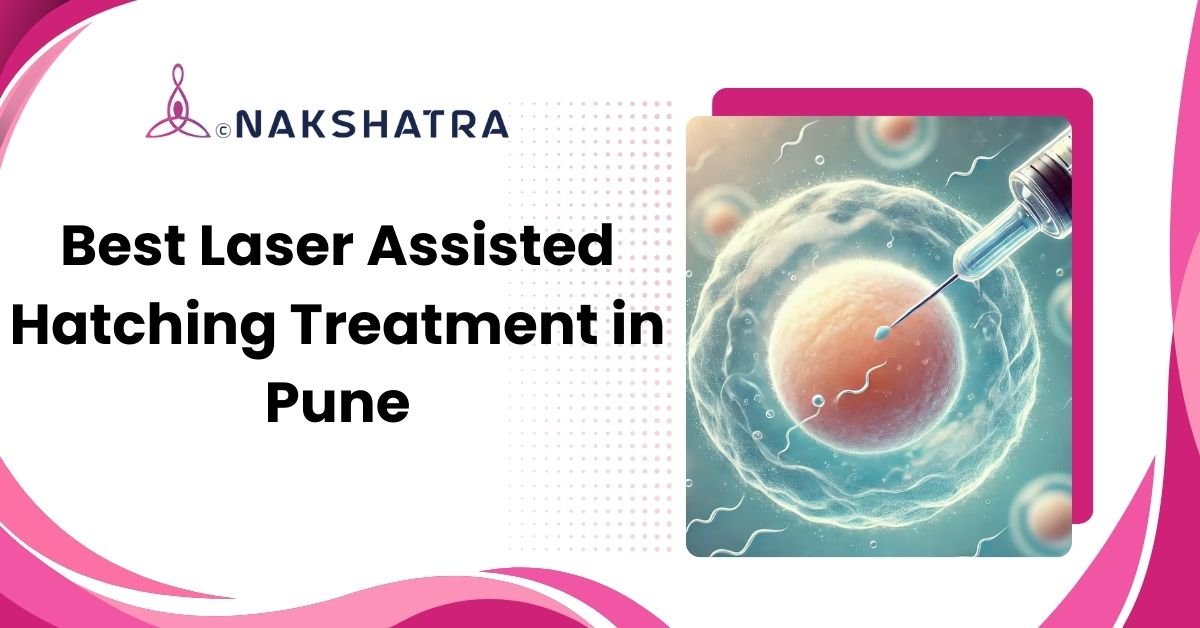
Embryos are reviewed before deciding whether hatching support is suitable.
Laser opening is done with modern microscopy and careful embryo handling.
Embryo transfer and monitoring continue with guided fertility support.

Every couple dreams of holding their little miracle, and Laser Assisted Hatching (LAH) is designed to improve embryo implantation support during IVF in selected cases. This gentle fertility technique may be especially useful for couples with previous IVF failures or specific embryo-related challenges. At Nakshatra Clinic, the procedure combines advanced laser technology with careful embryology lab handling and compassionate fertility care.
How laser-assisted hatching is performed during selected IVF treatment cycles.
Embryos are assessed before Laser Assisted Hatching to identify those that may benefit from the procedure.
An infrared laser creates a small opening in the embryo outer shell, called the zona pellucida.
The process is completed within controlled IVF lab conditions with careful embryo protection.
After LAH, embryo transfer is performed under expert guidance with post-IVF monitoring and support.
Modern laser systems, microscopes, and incubators support accurate hatching and embryo handling.
Planning is based on fertility history, age, embryo quality, and the IVF team assessment.
Laser Assisted Hatching is a brief embryology step designed to minimize handling and embryo stress.
Medical and emotional support continues through the IVF journey and post-procedure monitoring.
Suitability is individualized by the fertility team after reviewing IVF history and embryo factors.
Laser-assisted hatching is an advanced IVF procedure where a precise laser creates a tiny opening in the embryo outer shell, called the zona pellucida, to help it hatch and implant in the uterus.
You can undergo advanced Laser-Assisted Hatching at Nakshatra Clinic, Pune, where fertility specialists use reproductive technology to support embryo implantation and IVF planning.
The risks are minimal when performed by experienced embryologists. Rarely, embryos may not respond as expected, but the laser-assisted hatching technique is precise and widely used in IVF labs.
No, laser-assisted hatching in IVF does not increase the likelihood of twins. The number of embryos transferred determines the chance of multiple pregnancy.
Yes, the procedure is considered safe when performed by trained embryologists under controlled lab conditions using precise laser technology.
It may benefit women over 35, couples with previous IVF failures, those with poor embryo implantation, thick zona pellucida, or selected frozen-thawed embryos.
Book a consultation at Nakshatra Clinic in Baner, Pune to understand whether Laser Assisted Hatching is suitable for your IVF cycle.