Screened donors
Medical, genetic, infectious disease, and psychological screening are part of donor selection.

Compassionate donor egg IVF support for women and couples who need healthy donor eggs, careful screening, embryo development, and guided fertility care.
Medical, genetic, infectious disease, and psychological screening are part of donor selection.
Egg retrieval, fertilisation, embryo culture, and transfer are planned in a coordinated sequence.
Donor and recipient care includes emotional guidance and post-procedure support.

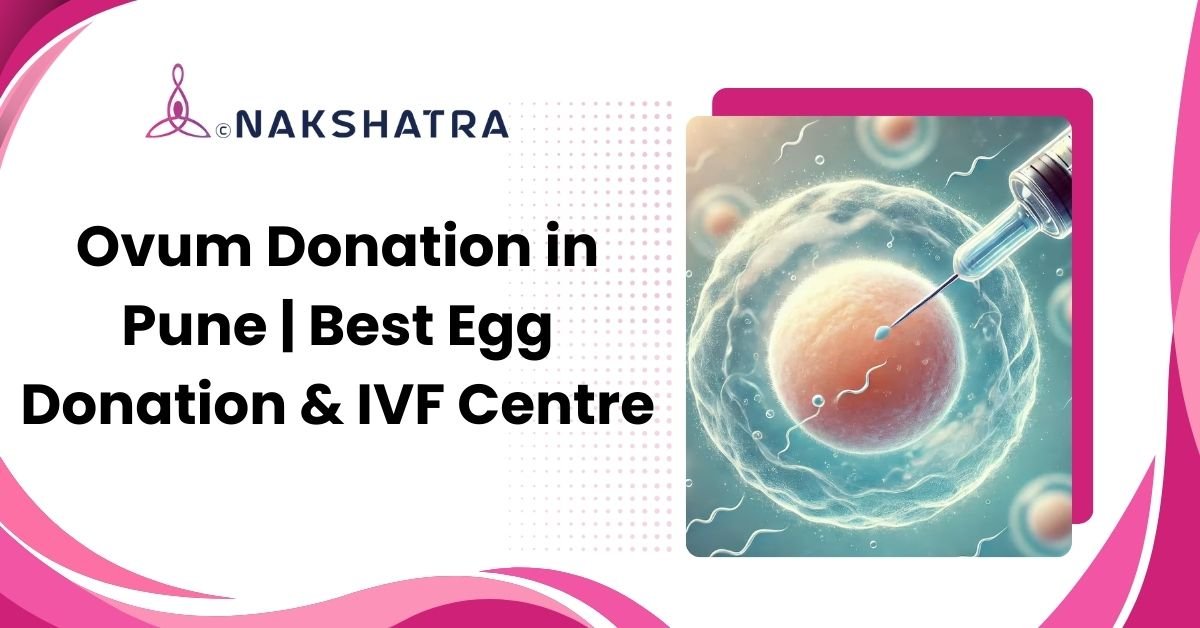
Ovum donation brings hope to women who face challenges conceiving with their own eggs. In this process, a healthy donor's unfertilized egg is carefully fertilized in the IVF laboratory, and the resulting embryo is transferred into the recipient's uterus. This treatment helps address concerns such as poor egg quality or low ovarian reserve while keeping care compassionate, ethical, and medically guided.
Step-by-step view of an ovum donation treatment cycle at Nakshatra Clinic.
The process begins by selecting a suitable egg donor from pre-screened donors who meet medical, physical, and psychological criteria.
The donor undergoes controlled ovarian stimulation with hormonal injections, monitored by ultrasound scans and blood tests.
Mature eggs are collected through transvaginal ovarian aspiration under mild sedation or anaesthesia for comfort.
The retrieved eggs are fertilised using partner sperm or donor sperm through IVF or ICSI, then cultured for embryo development.
Developed embryos are transferred into the recipient's uterus with a precise catheter technique, and remaining embryos may be frozen.
Donors are monitored for discomfort, recipients receive medication guidance, and counselling support is available throughout the journey.
Important screening and support details from the original content remain visible in a premium card layout.
Donors undergo a complete health check-up before approval for egg donation.
Screening includes infectious diseases such as HIV, Hepatitis B and C, and Syphilis.
Only donors who meet ethical and medical guidelines are approved for egg donation.
Ultrasound scans and blood tests help monitor donor response during ovarian stimulation.
Recipients are guided with medications and lifestyle advice to support implantation planning.
In-house fertility counsellors provide emotional and psychological support throughout the journey.
Ovum donation, also called egg donation, is when a healthy donor woman provides unfertilised eggs that are fertilised and the resulting embryo is transferred into the recipient's uterus. At the Baner, Pune clinic, the process includes donor screening, ovarian stimulation, egg retrieval, fertilisation, and embryo transfer.
Egg donation IVF may be considered for women with low ovarian reserve, poor egg quality, advanced age-related fertility decline, genetic disorders, or repeated IVF failure using their own eggs.
Donor criteria typically include a healthy woman aged 23-35 years, no communicable or inherited disorders, normal ovarian reserve, and a good general health profile. Screening may include blood tests, ultrasound, genetic screening, and psychological assessment.
After stimulation with hormonal injections, the donor undergoes transvaginal ultrasound-guided egg retrieval under sedation. The eggs are fertilised through IVF or ICSI, embryos are cultured, and a selected embryo is transferred into the recipient's uterus.
Risks are low, but may include mild discomfort, cramping, minimal bleeding, or risk of infection after egg retrieval. Rarely, stimulation may cause ovarian hyperstimulation syndrome. Donors are monitored closely and given aftercare guidance.
Book a consultation at Nakshatra Clinic in Baner, Pune to discuss ovum donation, donor screening, embryo development, transfer planning, and supportive fertility care.