Male-factor support
Used for low sperm count, poor motility, or abnormal sperm morphology.

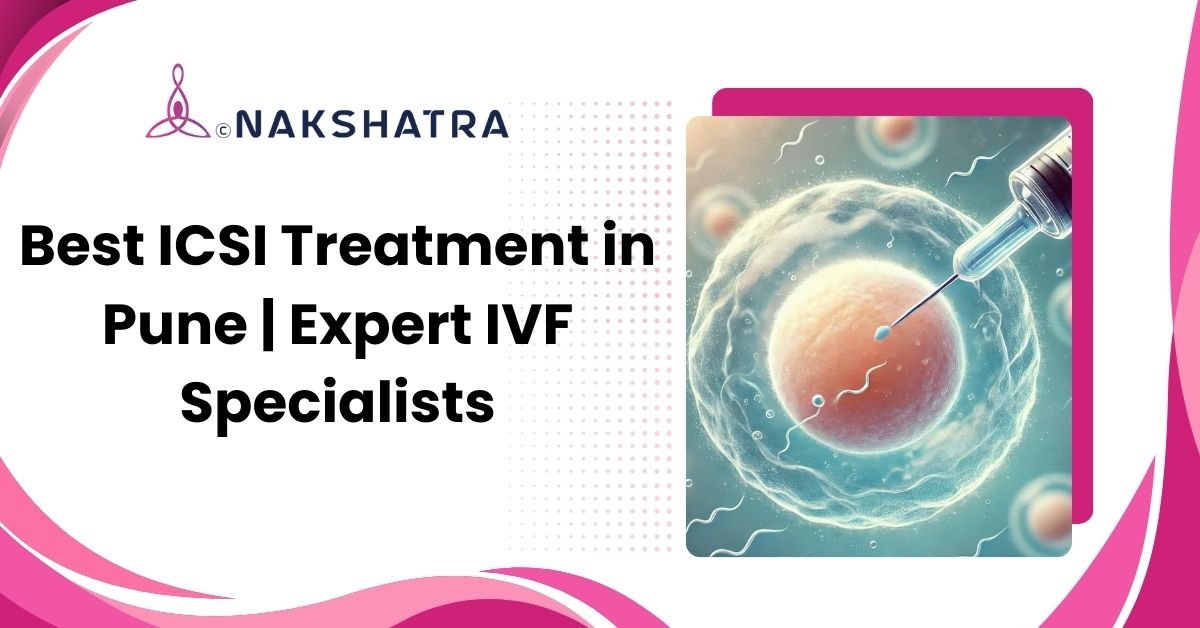
A specialized IVF technique where a single sperm is injected directly into a mature egg, used especially when male-factor infertility affects fertilization.
Used for low sperm count, poor motility, or abnormal sperm morphology.
A single selected sperm is injected into the egg in a controlled laboratory setting.
May be considered after failed IVF cycles or when eggs are limited or frozen.

Intracytoplasmic Sperm Injection (ICSI) is a specialized fertility treatment that has transformed possibilities for couples facing male infertility challenges. At Nakshatra Clinic in Baner, Pune, IVF specialists provide personalized care and advanced ICSI procedures for cases where traditional IVF may not be effective.
ICSI involves the precise injection of a single sperm into the cytoplasm of a mature egg in a laboratory setting, helping fertilization when sperm count, motility, or shape is compromised. This makes it an important treatment option for severe male-factor infertility.
The original ICSI advantages are preserved and organized into readable cards for easier comparison.
ICSI directly injects sperm into the egg, overcoming low sperm count, poor motility, or abnormal shape, and improving fertilization in severe male infertility cases.
Couples who experienced unsuccessful IVF cycles may benefit from ICSI because it provides an alternative way to fertilize eggs.
ICSI is useful when few eggs are available or when frozen or in vitro matured eggs need careful fertilization support.
ICSI addresses low sperm count, poor motility, and abnormal sperm morphology as part of male-factor infertility care.
When combined with sperm DNA fragmentation tests, ICSI planning can include sperm quality evaluation to guide fertility treatment decisions.
These indications are drawn from the original page and presented in a compact clinical flow.
ICSI can support fertilization when sperm numbers are too low for conventional IVF fertilization.
It may help when sperm movement is compromised and sperm cannot reliably reach or penetrate the egg.
ICSI is used when sperm shape concerns reduce the chance of fertilization with standard IVF methods.
Existing service destinations are kept visible for patients exploring advanced IVF care.
ICSI (Intra Cytoplasmic Sperm Injection) is a fertility technique where a single sperm is injected directly into a mature egg. This treatment is especially useful for male infertility caused by low sperm count, poor motility, or abnormal sperm morphology, ensuring fertilization in a controlled laboratory environment.
ICSI effectively addresses low sperm count, poor motility, abnormal shape, and blockages, making it one of the most comprehensive solutions for male infertility. It is also suitable for couples who have previously experienced failed IVF cycles.
ICSI increases fertilization success, addresses severe male infertility issues, enables fertilization of frozen or limited eggs, offers hope after failed IVF cycles, and allows predictive assessment with sperm DNA fragmentation testing to guide personalized fertility treatment.
Yes, ICSI is ideal for fertilizing frozen or in vitro matured eggs, ensuring maximum fertilization potential and increasing the chances of embryo development and successful pregnancy.
While traditional IVF combines eggs and sperm in a dish for natural fertilization, ICSI involves manually injecting a single sperm into the egg, bypassing fertilization barriers. This makes it more effective for severe male-factor infertility.
Book a consultation at Nakshatra Clinic in Baner, Pune to discuss male-factor infertility, previous IVF results, and whether ICSI is suitable for your treatment plan.