Finding out you have blocked fallopian tubes can feel overwhelming especially when your dream is to get pregnant. Many women immediately think, “Does this mean I can never have a baby?”
The good news? Blocked fallopian tubes do not always mean the end of your fertility journey. With the right diagnosis, treatment, and lifestyle support, many women go on to conceive naturally or with medical help. Women looking for expert care and personalized guidance for conditions like this often explore options for blocked fallopian tubes treatment in Baner, Pune, where experienced fertility specialists focus on identifying the root cause and offering targeted solutions.
In this guide, we’ll walk you through what blocked fallopian tubes mean, how they affect pregnancy, and 10 practical steps to increase your chances of getting pregnant.
What Are Blocked Fallopian Tubes?
Fallopian tubes play a crucial role in pregnancy. They are the pathway where the egg meets the sperm and fertilization occurs. If one or both tubes are blocked, the egg and sperm may not be able to meet naturally.
There are different types of blockage:
- Partial blockage – sperm or egg movement may be limited
- Complete blockage – fertilization cannot happen naturally
- One tube blocked vs both tubes blocked
This condition is also known as tubal factor infertility and is one of the most common causes of female infertility.
Common Causes of Fallopian Tube Blockage
Blocked tubes usually develop due to infection, inflammation, or scar tissue. Some common causes include:
- Pelvic inflammatory disease (PID)
- Sexually transmitted infections (STIs)
- Endometriosis
- Previous pelvic or abdominal surgery
- Tuberculosis
- Hydrosalpinx (fluid-filled blocked tube)
Over time, these conditions can create adhesions or swelling that block the tube and interfere with egg movement.
Symptoms & How Blocked Tubes Are Diagnosed
Symptoms
Many women with blocked fallopian tubes have no symptoms at all. Others may notice:
- Chronic pelvic pain
- Painful periods
- Unusual vaginal discharge
- Pain during intercourse
Diagnostic Tests
Doctors use imaging tests to check tubal health:
- HSG (Hysterosalpingography)
- Ultrasound
- Laparoscopy
These tests help determine whether the blockage is partial or complete and guide treatment.
Can You Get Pregnant with Blocked Fallopian Tubes?
Yes, in some cases, pregnancy is still possible.
- If one tube is open, natural pregnancy can happen
- If the blockage is partial, conception may still occur
- If both tubes are blocked, natural conception is unlikely, but IVF can help
Your chances depend on:
- Location of the blockage
- Severity of scarring
- Your age and ovulation health
- Presence of other fertility issues
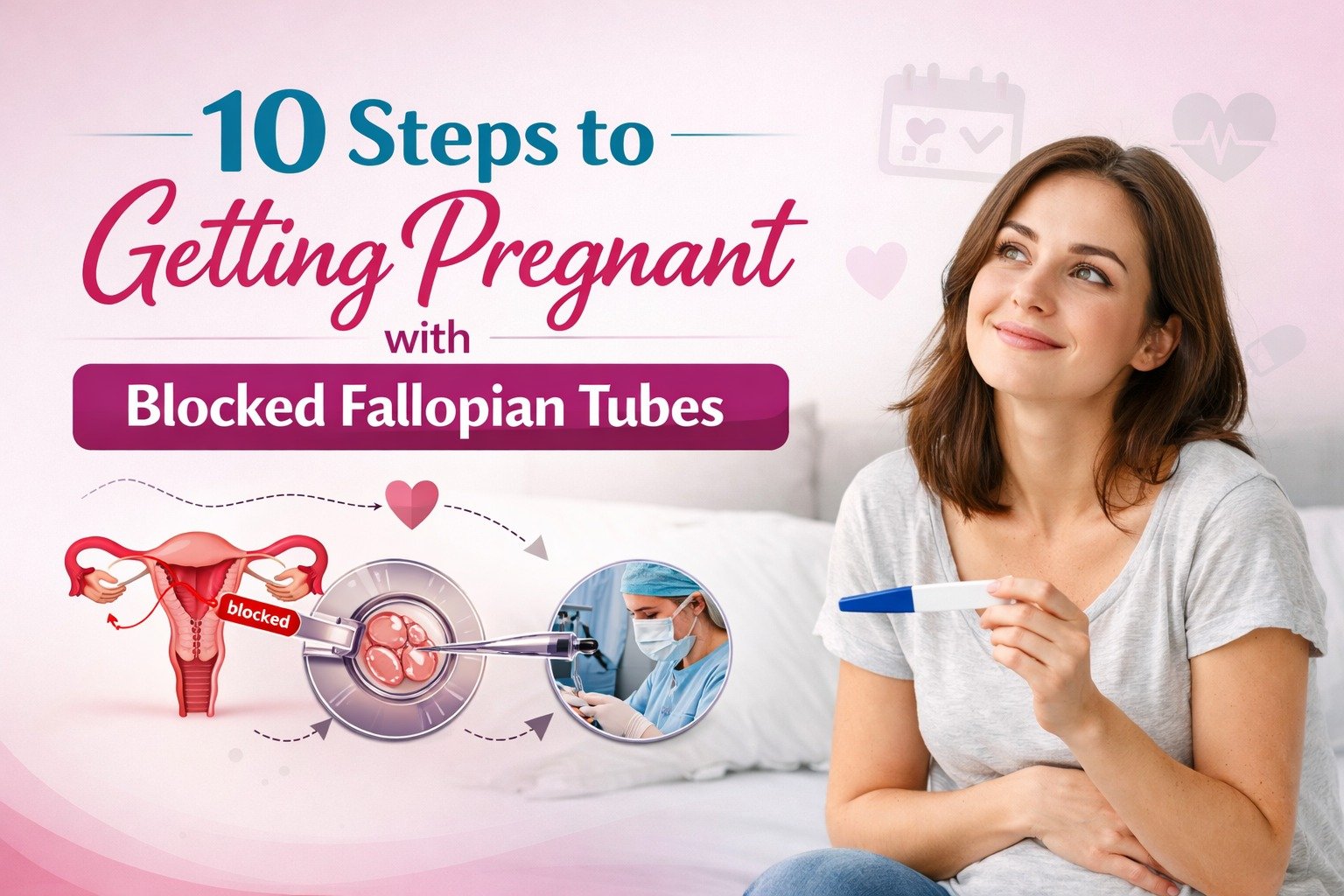
10 Steps to Getting Pregnant with Blocked Fallopian Tubes
Blocked fallopian tubes don’t mean pregnancy is impossible but they do mean you need a smarter, more focused approach. These 10 steps combine medical care, lifestyle changes, and emotional support to improve your chances.
Step 1: Get a Proper and Accurate Diagnosis
Not all fallopian tube blockages are the same. Some are mild and temporary, while others are severe and permanent. That’s why the first and most important step is knowing:
- Whether one or both tubes are blocked
- If the blockage is partial or complete
- Where the blockage is located (near the uterus or near the ovary)
- Whether infection or scar tissue is involved
Tests like HSG, ultrasound, or laparoscopy help doctors understand your exact condition. Without proper diagnosis, treatment may be delayed or ineffective.
Step 2: Treat Any Infection or Inflammation First
Infections such as pelvic inflammatory disease (PID) or tuberculosis can cause swelling and scarring inside the tubes. If infection is present:
- Antibiotics or medical therapy may be needed
- Inflammation must be controlled before trying to conceive
- Further damage to the tubes can be prevented
Sometimes, mild blockages caused by inflammation improve once the infection is treated. This step protects both your fertility and overall reproductive health.
Step 3: Improve Your Fertility with Diet and Lifestyle Changes
Your daily habits directly affect your hormones, egg quality, and overall reproductive system. A fertility-friendly lifestyle includes:
- Eating more fruits, vegetables, whole grains, and healthy fats
- Reducing processed foods and sugary snacks
- Staying hydrated
- Maintaining a healthy body weight
- Avoiding smoking, alcohol, and excess caffeine
- Sleeping well and managing stress
These changes don’t open blocked tubes directly, but they create a healthier environment for ovulation and pregnancy.
Step 4: Track Ovulation Carefully and Time Intercourse
When tubes are partially blocked or only one tube is open, timing becomes extremely important. You can:
- Use ovulation predictor kits
- Track your menstrual cycle
- Get ultrasound follicle monitoring if recommended
- Plan intercourse during the most fertile days
Accurate ovulation tracking increases the chance that sperm meets the egg at the right time, especially if only one tube is functional.
Step 5: Try Natural Methods to Support Tube Health
While natural methods cannot remove scar tissue, they can improve blood circulation and reduce inflammation around the reproductive organs. Helpful practices include:
- Light exercise such as walking or yoga
- Stress management through meditation or breathing exercises
- Drinking enough water
- Avoiding tight clothing that restricts pelvic circulation
- Eating anti-inflammatory foods
These methods support your body’s natural healing processes and improve overall fertility health.
Step 6: Consider Fallopian Tube Recanalization (If Suitable)
Fallopian tube recanalization (FTR) is a non-surgical procedure that may help certain women, especially when the blockage is close to the uterus. A thin tube (catheter) is used to gently open the blocked area.
This option may work best if:
- The blockage is mild
- There is no severe scarring
- Both tubes are not completely damaged
Some women are able to conceive naturally after this procedure, making it a useful option before moving to more advanced treatments.
Step 7: Explore Surgical Options When Recommended
In some cases, laparoscopic surgery may be suggested to:
- Remove scar tissue or adhesions
- Repair damaged sections of the fallopian tube
- Treat endometriosis or hydrosalpinx
Surgery can improve natural pregnancy chances in selected cases. However, success depends on how healthy the tubes are after repair. Your doctor will decide if surgery is likely to help or if IVF is a better option.
Step 8: Choose IVF When Both Tubes Are Severely Blocked
If both fallopian tubes are fully blocked or badly damaged, natural conception is unlikely. IVF (in vitro fertilization) becomes the most effective solution because:
- It bypasses the fallopian tubes completely
- Eggs are fertilized in a laboratory
- The embryo is placed directly into the uterus
IVF is often recommended when surgery is not helpful or when hydrosalpinx is present. For many women with severe tubal blockage, IVF offers the highest chance of pregnancy.
Step 9: Take Care of Your Emotional and Mental Health
Trying to conceive with fertility challenges can be stressful and emotionally exhausting. You may experience fear, frustration, or sadness. It helps to:
- Talk openly with your partner
- Join a support group
- Seek counseling if needed
- Take breaks from constant worry about results
A healthy mind supports a healthy body. Emotional well-being is an important part of fertility treatment and should never be ignored.
Step 10: Work Closely with a Fertility Specialist
Every woman’s fertility journey is different. A fertility specialist can:
- Create a personalized treatment plan
- Monitor your progress
- Adjust treatment based on your response
- Help you choose between natural methods, surgery, or IVF
Regular follow-ups and expert guidance prevent wasted time and improve your chances of success.
Success Rates & Pregnancy Chances
Pregnancy outcomes depend on treatment choice:
- Natural conception may be possible with one open tube
- Recanalization or surgery may help mild blockages
- IVF offers the highest success for complete blockage
Common Myths About Blocked Fallopian Tubes
Many women feel discouraged after being diagnosed with blocked fallopian tubes, often because of misinformation. Let’s clear up some of the most common myths and replace them with facts you can trust.
Myth 1: Blocked fallopian tubes mean you can never get pregnant.
Fact: This is not true for everyone. If only one tube is blocked and the other is healthy, natural pregnancy is still possible. Even when both tubes are blocked, medical treatments such as IVF can help you conceive by bypassing the tubes entirely.
Myth 2: Surgery always fixes blocked fallopian tubes.
Fact: Surgery can help in certain cases, especially when scar tissue or mild adhesions are the cause. However, it does not work for everyone. The success of surgery depends on where the blockage is and how damaged the tubes are.
Myth 3: IVF is the only option if your tubes are blocked.
Fact: IVF is a very effective option, but it is not always the first or only choice. Some women may benefit from fallopian tube recanalization or minor surgical correction before moving to IVF. The right treatment depends on the type of blockage.
Myth 4: Blocked tubes always cause noticeable symptoms.
Fact: Many women with blocked fallopian tubes have no symptoms at all. The condition is often discovered only after fertility testing, which is why early evaluation is important if pregnancy is delayed.
Myth 5: Natural remedies can completely unblock fallopian tubes.
Fact: A healthy diet and lifestyle can support overall reproductive health, but they cannot reliably remove physical blockages caused by scarring or infection. Medical assessment is necessary to determine the real cause and proper treatment.
Myth 6: Once tubes are blocked, treatment will never work.
Fact: With modern fertility treatments, many women with tubal blockage go on to have successful pregnancies. The key is correct diagnosis and choosing the most suitable treatment option.
Understanding the truth behind these myths can help reduce fear and confusion. A diagnosis of blocked fallopian tubes does not mean giving up, it means finding the right path forward with informed decisions and proper medical guidance.
When Should You See a Doctor?
You should consult a doctor if:
- You’ve been trying for 6–12 months without success
- You have a history of pelvic infections or surgery
- You experience pelvic pain or irregular cycles
Early evaluation can save time and prevent further complications.
Final Thoughts: There Is Still Hope
Blocked fallopian tubes can feel like a major obstacle, but they do not mean the end of your dream of becoming a parent. With proper diagnosis, healthy lifestyle choices, and the right medical guidance from experienced centers like Nakshatra Clinic, many women go on to achieve a successful pregnancy.
The most important step is not to delay. Early evaluation and a personalized treatment plan can make a significant difference in your chances of conception.
If you have been trying to conceive without success or have been diagnosed with tubal blockage, it’s time to seek expert help. Dr. Ramit Raosaheb Kamate, a trusted fertility specialist at Nakshatra Clinic, offers comprehensive evaluation and advanced treatment options tailored to your individual needs.
Book a consultation with Dr. Ramit Raosaheb Kamate today to understand your fertility status and explore the best possible treatment path for you. Your journey to parenthood deserves the right care, the right guidance, and the right time to begin.
Blocked tubes are a challenge but with the right support, they are not the end of the road.