
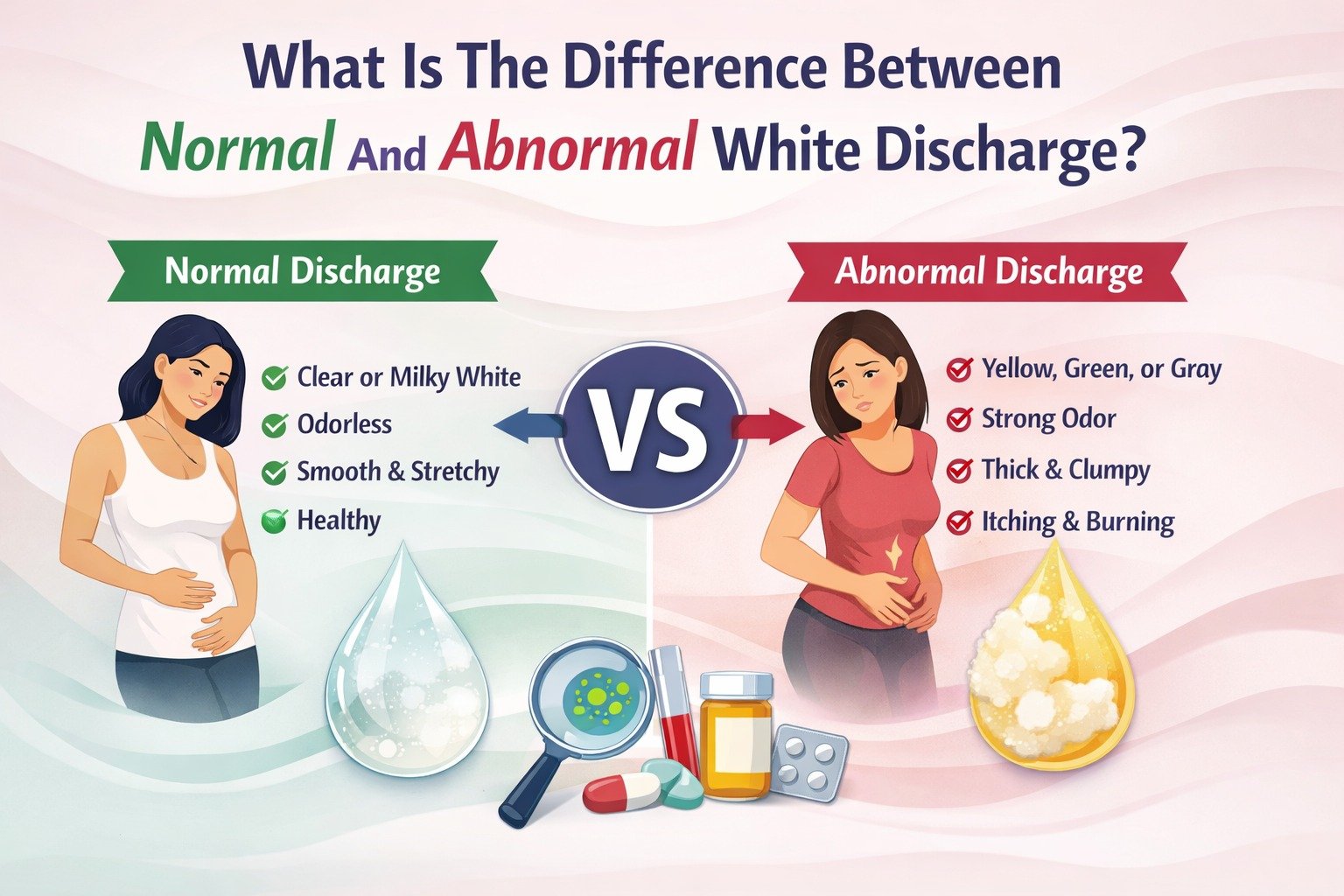
Have you ever noticed white discharge and wondered, "Is this normal or something I should worry about?" You're not alone. Many women experience vaginal discharge regularly, yet confusion about what's healthy and what's not is very common.
The truth is, white discharge is a natural and important part of vaginal health. However, in some cases, it can signal an underlying issue or infection. Understanding the difference between normal and abnormal white discharge can help you take better care of your body and know when to seek medical advice.
In this blog, we'll break everything down in a simple and clear way - so you can confidently identify what's normal and what's not. If you're ever unsure, consulting experienced specialists at Nakshatra Clinic can provide the right guidance and reassurance.
What Is White Discharge?
White discharge, also known as vaginal discharge, is a fluid released by glands inside the vagina and cervix. It plays a crucial role in maintaining vaginal health.
Why does it happen?
- It helps clean the vagina naturally
- Removes dead cells and bacteria
- Maintains the right pH balance
- Prevents infections
This means that discharge is not something to be embarrassed about-it's actually a sign that your body is functioning properly. The amount, color, and texture of discharge can vary depending on your hormonal changes, menstrual cycle, pregnancy, or lifestyle factors.
What Is Normal White Discharge?
Normal white discharge is your body's way of keeping your reproductive system healthy. It can vary from person to person, but there are some common characteristics.
Key Features of Normal Discharge
- Color: Clear, transparent, or milky white
- Texture: Thin, slippery, or slightly thick
- Smell: Mild or odorless
- Amount: Changes during the menstrual cycle
When Does Normal Discharge Occur?
1. During Ovulation
During ovulation, discharge becomes clear, stretchy, and slippery, similar to egg whites. This helps sperm travel easily and indicates peak fertility. It is completely normal and a healthy sign.
2. Before or After Periods
Before or after periods, discharge is usually thicker and white. It occurs due to hormonal changes in the menstrual cycle and helps maintain vaginal cleanliness and balance naturally.
3. During Pregnancy
During pregnancy, hormonal changes increase vaginal discharge, making it milky and more noticeable. This helps protect the reproductive system from infections and keeps the vaginal environment healthy and balanced.
4. During Sexual Arousal
During sexual arousal, the body produces natural lubrication, appearing as clear or white discharge. This reduces friction, enhances comfort during intercourse, and is a completely normal physiological response.
Important Note: As long as the discharge is not accompanied by discomfort, itching, or a strong odor, it is generally considered healthy.
What Is an Abnormal White Discharge?
Abnormal discharge is your body's way of signaling that something might not be right. It often comes with noticeable changes in color, smell, or texture.
Warning Signs of Abnormal Discharge
- Thick, clumpy texture (like cottage cheese)
- Yellow, green, or gray color
- Strong, unpleasant or fishy odor
- Itching, burning, or irritation
- Pain during urination or intercourse
Common Causes of Abnormal Discharge
1. Yeast Infection
- Thick, white, clumpy discharge
- Intense itching and irritation
2. Bacterial Vaginosis
- Thin gray or white discharge
- Strong fishy smell
3. Sexually Transmitted Infections (STIs)
- Yellow or green discharge
- Pain and discomfort
4. Hormonal Imbalance or Poor Hygiene
- Can disrupt natural vaginal flora
If you notice any of these symptoms, it's important to seek timely care. Clinics like Nakshatra Clinic, under the guidance of Dr. Ramit Raosaheb Kamate, focus on accurate diagnosis and personalized treatment for women's health concerns.
Difference Between Normal and Abnormal White Discharge
| Feature | Normal Discharge | Abnormal Discharge |
|---|---|---|
| Color | Clear or milky white | Yellow, green, gray |
| Smell | Mild or none | Strong, foul, fishy |
| Texture | Smooth, stretchy | Thick, clumpy |
| Symptoms | No discomfort | Itching, burning |
| Health Impact | Healthy | May indicate infection |
Causes of White Discharge
Normal Causes
- Hormonal fluctuations
- Ovulation
- Pregnancy
- Sexual arousal
Abnormal Causes
- Fungal infections (yeast)
- Bacterial infections
- Poor hygiene
- Antibiotic use
- Stress or hormonal imbalance
When Should You Worry About White Discharge?
Seek medical help if you notice:
- Persistent bad odor
- Unusual color (yellow, green, gray)
- Severe itching or irritation
- Pain during urination
- Sudden increase in discharge
Early diagnosis can prevent complications and ensure quick recovery. You can consider consulting specialists at Nakshatra Clinic for a thorough evaluation and proper treatment.
Treatment for Abnormal White Discharge
Medical Treatments
- Antifungal medications for yeast infections
- Antibiotics for bacterial infections
- Prescription treatments for STIs
Home Care Tips
- Maintain proper hygiene
- Wear breathable cotton underwear
- Avoid scented soaps or sprays
- Stay hydrated
- Practice safe sex
Avoid self-medication — professional consultation ensures the right treatment.
Natural Tips to Maintain Healthy Vaginal Discharge
Simple Tips:
- Eat a balanced diet rich in probiotics
- Drink plenty of water
- Avoid tight or synthetic clothing
- Maintain proper hygiene
- Avoid excessive use of intimate products
White Discharge During Different Phases
Ovulation Phase
During ovulation, white discharge becomes clear, stretchy, and slippery like egg whites. This helps sperm travel easily and indicates high fertility, making it the best time for conception.
Before Periods
Before periods, discharge often turns thicker and white. This happens due to hormonal changes, especially increased progesterone levels. It is completely normal unless accompanied by odor, itching, or irritation.
During Pregnancy
During pregnancy, white discharge increases and becomes milky. This is called leukorrhea and helps protect the uterus from infections. It is normal unless it has a strong smell or unusual color.
After Intercourse
After intercourse, white discharge may increase temporarily due to lubrication and mixing of fluids. This is normal and helps cleanse the vaginal area, unless it causes discomfort, odor, or irritation.
Frequently Asked Questions (FAQs)
1. Is white discharge normal every day?
Yes, white discharge can be normal every day if it is clear or milky, odorless, and does not cause itching or irritation. It helps keep the vagina clean and balanced. The amount may vary depending on hormonal changes, ovulation, or lifestyle, and is usually nothing to worry about.
2. What color discharge is unhealthy?
Discharge that appears yellow, green, gray, or has a strong foul smell is considered unhealthy. These changes may indicate an infection such as bacterial vaginosis or a sexually transmitted infection. If accompanied by itching, burning, or irritation, it is important to consult a doctor for proper diagnosis and treatment.
3. Does white discharge mean infection?
No, white discharge does not always mean infection. Normal discharge is a healthy sign of the body's natural cleansing process. However, if the discharge becomes thick, clumpy, has a strong odor, or causes discomfort, it could indicate an infection and should be evaluated by a healthcare professional.
4. Can white discharge be a sign of pregnancy?
Yes, white discharge can be an early sign of pregnancy due to hormonal changes in the body. It is usually thin, milky, and odorless. This type of discharge helps protect the reproductive system. However, any unusual smell or irritation should be checked by a doctor to rule out infection.
5. Is thick white discharge normal?
Thick white discharge can be normal, especially before or after periods due to hormonal fluctuations. However, if it appears clumpy like cottage cheese and is accompanied by itching or irritation, it may indicate a yeast infection. In such cases, medical advice is recommended for proper treatment.
6. When should I see a doctor for white discharge?
You should see a doctor if your discharge has a strong or foul smell, unusual color like yellow or green, or is accompanied by itching, burning, or pain. Sudden changes in quantity or consistency should also be checked to ensure there is no underlying infection or health issue.
Conclusion
White discharge is a natural and essential part of a woman's reproductive health. The key is understanding the difference between normal and abnormal white discharge.
- Normal discharge is healthy and varies with your cycle
- Abnormal discharge may signal an infection and needs attention
Being aware of your body's signals can help you stay healthy and confident. And if you ever feel unsure, seeking expert advice from professionals like Dr. Ramit Raosaheb Kamate at Nakshatra Clinic can ensure you receive the right care at the right time.